Why Music Makes Us Feel What We See
The Power of Music in Storytelling
Music can change the meaning of an image before we have time to explain why. How rhythm, harmony, texture, and silence shape what an audience feels on screen.
By The Producers Factory Journal · · 5 min read
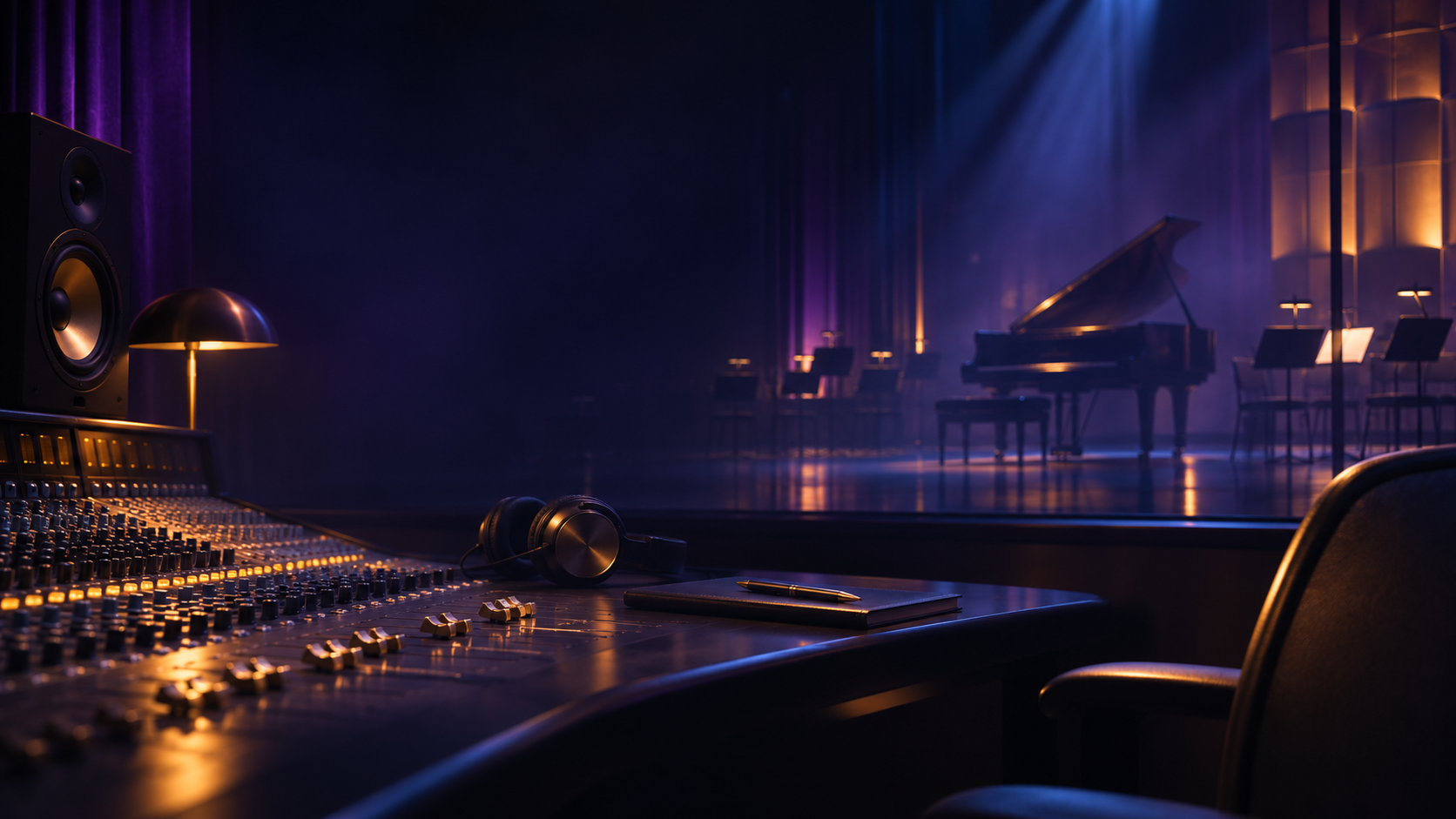

Music can change the meaning of an image before we have time to explain why.
Watch a character open a door and the moment may feel ordinary, suspenseful, hopeful, or tragic depending on what the audience hears. The frame has not changed. The performance has not changed. Yet the emotional information has shifted. Music is one of the most powerful ways a story tells us how to feel what we see.
That is why the relationship between image and sound matters so much in film, advertising, branded content, and every form of visual storytelling. Music does not simply sit beneath a scene. It creates expectation, directs attention, builds memory, and gives emotional shape to time.
Try removing the score from a favorite scene. The dialogue remains. The lighting remains. The edit remains. But the experience often becomes flatter, more ambiguous, or more distant. A sustained note can make us anticipate danger. A warm harmony can make a familiar room feel safe. A rhythmic pulse can turn a simple movement into momentum. Silence can do the opposite. It can hold a moment open and make the audience listen more closely to what is not being said.
The effect is not accidental. Music works because it speaks to several layers of perception at once. Rhythm can mirror the pace of an edit or the physical energy of a character. Harmony can create tension, release, tenderness, or uncertainty. Timbre can suggest place, time, scale, or identity. A low, dark texture can make a landscape feel vast. A fragile piano figure can make a private memory feel close enough to touch.
These choices become especially meaningful when they are made in conversation with the image. The strongest scores do not describe every action. They find the emotional current underneath the action. If a character is walking through a city, the music does not need to imitate every footstep. It might reveal the character’s isolation, determination, or sense of possibility. If a product appears in a frame, the music can help define whether that product feels precise, luxurious, human, playful, or quietly essential.
Consider how a theme can change over the course of a story. The same melody heard early in a quiet setting can return later with fuller harmony, a slower tempo, or a different instrument. The audience may not consciously notice the connection, yet the return carries everything that has happened in between. Repetition becomes a form of memory, and variation becomes a way of showing change.
Contrast matters as well. A gentle score placed against a tense image can make a scene feel unsettling rather than calm. An energetic rhythm under a still frame can suggest that something is about to break. These deliberate tensions between what we see and what we hear invite the audience to lean in and interpret, which is often where the deepest engagement begins.
This is where storytelling becomes a craft of restraint. More music is not always more emotion. Sometimes a scene needs space. Sometimes the most expressive decision is to delay the entrance of the score until a visual detail has landed. Sometimes a single chord, placed at exactly the right moment, can change the audience’s understanding of everything that came before it.
The same principle applies to sound design. Texture, ambience, transitions, and silence all participate in the emotional architecture of a scene. A room can feel intimate because of the way its air is shaped. A cut can feel larger because a sound carries across it. A subtle shift in tone can move the audience from reality into memory without announcing the transition.
For creators, this means music should enter the process early enough to influence the story, not only decorate a finished edit. When composers, producers, directors, editors, and designers share a clear emotional objective, the result can feel unified. The picture and the sound begin to behave like one language.
At The Producers Factory, we think about music as part of that language. The goal is not simply to make something sound impressive. It is to make the audience feel the intended meaning of a moment, often before they can name it. That requires curiosity, technical control, and an ear for what the story is asking the music to do.
The best music does not compete with the image. It gives the image a deeper interior life. It helps us understand why a glance matters, why a place feels unforgettable, or why a final frame stays with us after the screen goes dark.
Music makes us feel what we see because it turns looking into experience. It does not just accompany the story. It helps us remember it.